Today's
EarthStation1.com 15% (Or More!) Off Commemorative Memorial Title:
Deputy Dawg TV Cartoon Series MP4 Download 2 Disc DVD Set USB
Drive
Today, August 3, 2026
August 3: National Watermelon Day: -- Today we celebrate this ancient berry in a feast of juicy deliciousness! Did you know that watermelon is 92% water? No wonder it's so refreshing! People have been digging into this tasty, juicy fruit for millennia and it all started in Ancient Egypt. It's said that watermelon cultivation began in the Nile Valley as early as the second millennium B.C. Watermelon seeds were even found in King Tut's tomb! The juicy, refreshing watermelon deserves its own day, that's why we celebrate National Watermelon Day. Cultivation of this fruit dates back to 2000 B.C., with the first watermelon harvest on record occurring approximately 5,000 years ago in Egypt. Traces of watermelon and its seeds have been discovered on sites of the 12th Egyptian Dynasty, including in the tomb of King Tutankhamen. Paintings of different types of watermelon have also been found in ancient Egyptian inscriptions. The sweet fruit we enjoy today is the result of mutations over the course of a thousand years of cultivation. Watermelon seeds were sold to traders passing through the trade routes in the Kalahari Desert in Africa. From there, the cultivation of the watermelon spread across Africa. The origin of the progenitor of the watermelon was in Africa, after which it spread into Mediterranean countries and other parts of Europe. By the end of the ninth century, watermelon cultivation became common in China and the rest of Asia. According to "The Dictionary of American Food and Drink" by John Mariani, the word 'watermelon' first appeared in the English dictionary in 1615. The watermelon is commonly known as a type of melon, but it is not in the genus Cucumis. The outer rind of a watermelon is dark green with yellow stripes or spots. Over 300 varieties of watermelon are available in the U.S., ranging from red to white, and come in different shapes and sizes. On Sale Until Midnight Tonight PT! https://store.earthstation1.com/deputy-dawg-dvd-set-2-discs-complete-terrytoons-cartoon-serie2.html
Today's
EarthStation1.com 15% (Or More!) Off Commemorative Memorial Title:
Soup To Nuts (1930) The Three Stooges Rube Goldberg DVD, Download,
USB
Today, August 3, 2026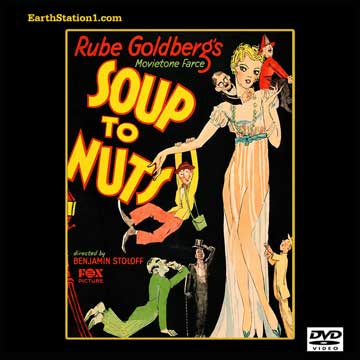
August 3: National Grab Some Nuts Day: -- The ultimate nutty day! Nuts, legumes, seeds drupes, either way - they're all considered nuts and are all in some way a part of our daily diet. Nuts are rich in nutrients and minerals, and if eaten in the correct quantities, are great for improving our health. This day promotes the consumption of all nuts, the health benefits, and their tastiness. You won't be surprised to hear that it's a very nutty occasion. Although the origin of National Grab Some Nuts Day is unknown, we do know that when this day first started being observed there was some confusion to its purpose. Some were celebrating the nuts we eat, whereas others thought it was all about the metal nuts that go with bolts. Whilst these metal nuts obviously serve their purpose, we'd rather be celebrating food, which is pretty much our stance on most matters. There is also ample discussion on what is defined as a nut and what is a legume. A legume is generally recognized as a pod containing multiple seeds that begins to open on its own when the season for harvesting approaches. For the purposes of National Grab Some Nuts Day, we suggest celebrating the day by grabbing a handful and savoring the taste! Whatever it may be, either botanical or non botanical nuts, nuts have an impressive amount of protein, vitamins,minerals, potassium, iron and so on. They say "an apple a day keeps the doctor away," but even nuts are also capable of this! Consider consuming nuts on a daily basis for snacking to absorb those important nutrients. Other nutty days do occur throughout the year. These include National Almond Day and National Pecan Day. There's also a day for cashews, walnuts, peanuts, macadamia nuts, pistachios, and chestnuts. This day is a day for celebrating all these days bundled up in one and grabbing handfuls of as many different kinds as you like. Raw or roasted. Salted, seasoned or plain. On Sale Until Midnight Tonight PT! https://store.earthstation1.com/soup-to-nuts-dvd-three-stooges-rube-goldberg.html
Today's
EarthStation1.com 15% (Or More!) Off Commemorative Memorial Title:
Columbus & The Age Of Discovery TV Series + Bonus MP4 Download
DVD Set
Today, August 3, 2026
August 3, 1492: The Age Of Discovery (The Age Of Exploration): The Voyages Of Christopher Columbus: The First Voyage Of Christopher Columbus: -- Christopher Columbus sets sail on the first of his four voyages, leaving in the evening from Palos de la Frontera, Spain, with three ships. The largest ship was a carrack (Spanish: nao), the Santa Maria (formerly known as the Gallega (Spanish: "Galician")). The other two ships were smaller caravels. The name of one is lost: it is known today only by the nickname Pinta, which in Castilian of the time meant "painted one". The Santa Clara was nicknamed affectionately the Nina ("the little one"), a pun on the name of her owner, Juan Nino of Moguer.] The monarchs forced the citizens of Palos to contribute to the expedition. The Santa Maria was owned by Juan de la Cosa and captained by Columbus. The Pinta and the Nina were piloted by the Pinzon brothers (Martin Alonso and Vicente Yanez). Thus Columbus embarked on the first of his four great voyages of discovery. The purpose of this voyage was to find a westerly route to the Far East; he instead landed on October 12th in the Bahamas, thinking it was an outlying Japanese island. On Sale Until Midnight Tonight PT! https://store.earthstation1.com/columbus-and-the-age-of-discovery-epic-7-hourlong-episode-tv-serie7.html
Today's
EarthStation1.com 15% (Or More!) Off Commemorative Memorial Title:
The Guns Of August (1964) WWI Film DVD, Video Download, USB Drive
Today, August 3, 2026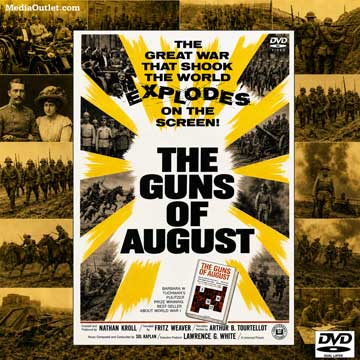
August 3, 1914: Causes Of The European Civil War (Events Leading To The European Civil War): Causes Of World War I (Events Leading To World War I): The Guns Of August: The July Crisis: The German Empire's Declaration Of War On The French Republic: -- Germany declares war against France, while Romania declares its neutrality. Following on the July 28, 1914 declaration of war by Austria-Hungary on Serbia, Austria-Hungary's ally, the German Empire, declared war on the Russian Empire on August 1, 1914, deepening the opening of World War I. The assassination of Austrian Archduke Ferdinand on June 28, 1914 led to a month of diplomatic manoeuvring between Austria-Hungary, Germany, Russia, France and Britain, called the July Crisis. Austria-Hungary correctly believed that Serbian officials (especially the officers of the Black Hand) were involved in the plot to murder the Archduke, and wanted to finally end Serbian interference in Bosnia. On July 23, Austria-Hungary delivered to Serbia the July Ultimatum, a series of ten demands that were made intentionally unacceptable, in an effort to provoke a war with Serbia. Serbia decreed general mobilisation on the 25th. Serbia accepted all of the terms of the ultimatum except for article six, which demanded that Austrian delegates be allowed in Serbia for the purpose of participation in the investigation into the assassination. Following this, Austria broke off diplomatic relations with Serbia and, the next day, ordered a partial mobilisation. Finally, on July 28, 1914, Austria-Hungary declared war on Serbia. On 29 July, Russia, in support of Serbia, declared partial mobilisation against Austria-Hungary. On the 30th, Russia ordered general mobilisation. German Chancellor Bethmann-Hollweg waited until the 31st for an appropriate response, when Germany declared a "state of danger of war". Kaiser Wilhelm II asked his cousin, Tsar Nicolas II, to suspend the Russian general mobilisation. When he refused, Germany issued an ultimatum demanding its mobilisation be stopped, and a commitment not to support Serbia. Another was sent to France, asking her not to support Russia if it were to come to the defence of Serbia. On August 1, after the Russian response, Germany mobilised and declared war on Russia. This also led to the general mobilisation in Austria-Hungary on August 4. The German government issued demands to France that it remain neutral as they had to decide which deployment plan to implement, it being difficult if not impossible to change the deployment whilst it was underway. The modified German Schlieffen Plan, Aufmarsch II West, would deploy 80% of the army in the west, and Aufmarsch I Ost and Aufmarsch II Ost would deploy 60% in the west and 40% in the east as this was the maximum that the East Prussian railway infrastructure could carry. The French did not respond, but sent a mixed message by ordering their troops to withdraw 10 km (6 mi) from the border to avoid any incidents, and at the same time ordered the mobilisation of her reserves. Germany responded by mobilising its own reserves and implementing Aufmarsch II West. On August 1, Wilhelm ordered General Moltke to "march the whole of the _ army to the East" after he had been wrongly informed that the British would remain neutral as long as France was not attacked. The General convinced the Kaiser that improvising the redeployment of a million men was unthinkable and that making it possible for the French to attack the Germans "in the rear" might prove disastrous. Yet Wilhelm insisted that the German army should not march into Luxembourg until he received a telegram sent by his cousin George V, who made it clear that there had been a misunderstanding. Eventually the Kaiser told Moltke, "Now you can do what you want." Germany attacked Luxembourg on August 2, and on August 3 declared war on France. On August 4, after Belgium refused to permit German troops to cross its borders into France, Germany declared war on Belgium as well. Britain declared war on Germany at 19:00 UTC on August 4, 1914 (effective from 11 pm), following an "unsatisfactory reply" to the British ultimatum that Belgium must be kept neutral. On Sale Until Midnight Tonight PT! https://store.earthstation1.com/the-guns-of-august-dvd-1964-world-war-i-movie-documen1964.html
Today's
EarthStation1.com 15% (Or More!) Off Commemorative Memorial Title:
World War 1 TV Series With Robert Ryan DVD, Video Download, USB
Drive
Today, August 3, 2026
August 3, 1887: #BOTD: #HBD! Rupert Brooke, English poet known for his idealistic war sonnets written during the First World War, especially "The Soldier", founder of The Neo-Pagans (d. April 23, 1915) is #born Rupert Chawner Brooke (middle name sometimes given as "Chaucer") at 5 Hillmorton Road, Rugby, Warwickshire, Englad, named after a great-grandfather on his mother's side, Rupert Chawner (1750-1836), a distinguished doctor descended from English politician Thomas Chaloner, commissioner at the trial of Charles I and signatory to his death warrant. Known for his boyish good looks, which were said to have prompted the Irish poet W. B. Yeats to describe him as "the handsomest young man in England", Rupert Brooke was the founder of a bohemian lifestyle group known as The Neo-Pagans (so named by occassional member Virginia Woolf) who would meet to practice a liberated, bohemian, outdoor life influenced by some of the most progressive thinkers of the late Victorian era. While travelling in Europe he prepared a thesis, entitled "John Webster and the Elizabethan Drama", which won him a scholarship to King's College, Cambridge. There he became a member of the Apostles, was elected as President of the Fabian Society, helped found the Marlowe Society drama club and acted, including the Greek Play. The friendships he made at school and university set the course for his adult life, and many of the people he met - including for example George Mallory - fell under his spell.Virginia Woolf boasted to Vita Sackville-West of once going skinny-dipping with Brooke in a moonlit pool when they were in Cambridge together. Brooke made friends among the Bloomsbury group of writers (a group of associated English writers, intellectuals, philosophers and artists, the best known members of which included Virginia Woolf, John Maynard Keynes, E. M. Forster and Lytton Strachey, some of whom admired his talent while others were more impressed by his good looks. He also belonged to another literary group known as the Georgian Poets (those whose works appeared in a series of five anthologies named Georgian Poetry, published by Harold Monro and edited by Edward Marsh, the first volume of which contained poems written in 1911 and 1912) and was one of the most important of the Dymock poets, a literary group of the early 20th century who made their homes near the village of Dymock in Gloucestershire in south west England, where he spent some time before the war. He also lived in the Old Vicarage, Grantchester, which stimulated one of his best-known poems, named after the house, written with homesickness while in Berlin in 1912. Brooke suffered a severe emotional crisis in 1912, caused by sexual confusion (he was bisexual) and jealousy, resulting in the breakdown of his long relationship with fellow Neo-Pagan Ka Cox (Katherine Laird Cox). Brooke's paranoia that Lytton Strachey had schemed to destroy his relationship with Cox by encouraging her to see Henry Lamb precipitated his break with his Bloomsbury group friends and played a part in his nervous collapse and subsequent rehabilitation trips to Germany. As part of his recuperation, Brooke toured the United States and Canada to write travel diaries for the Westminster Gazette. He took the long way home, sailing across the Pacific and staying some months in the South Seas. Much later it was revealed that he may have fathered a daughter with a Tahitian woman named Taatamata with whom he seems to have enjoyed his most complete emotional relationship. Many more people were in love with him. Brooke was romantically involved with the artist Phyllis Gardner and the actress Cathleen Nesbitt, and was once engaged to Noel Olivier, whom he met when she was aged 15 at the progressive Bedales School. Brooke enlisted at the outbreak of war in August 1914. He came to public attention as a war poet early the following year, when The Times Literary Supplement published two sonnets ("IV: The Dead" and "V: The Soldier") on March 11; the latter was then read from the pulpit of St Paul's Cathedral on Easter Sunday (April 4). Brooke's most famous collection of poetry, containing all five sonnets, 1914 And Other Poems, was first published in May 1915 and, in testament to his popularity, ran to 11 further impressions that year and by June 1918 had reached its 24th impression; a process undoubtedly fuelled through posthumous interest. Brooke's accomplished poetry gained many enthusiasts and followers, and he was taken up by Edward Marsh, who brought him to the attention of Winston Churchill, then First Lord of the Admiralty. Brooke was commissioned into the Royal Naval Volunteer Reserve as a temporary Sub-Lieutenant shortly after his 27th birthday and took part in the Royal Naval Division's Antwerp expedition in October 1914. Brooke sailed with the British Mediterranean Expeditionary Force on February 28, 1915 but developed sepsis from an infected mosquito bite. Rupert Brooke died at 4:46 pm on the French hospital ship, the Duguay-Trouin, moored in a bay off the Greek island of Skyros in the Aegean Sea, while on his way to the landing at Gallipoli, aged 27. As the expeditionary force had orders to depart immediately, Brooke was buried at 11 pm in an olive grove on Skyros, Greece. The site was chosen by his close friend, William Denis Browne, who wrote of Brooke's death: "I sat with Rupert. At 4 o'clock he became weaker, and at 4.46 he died, with the sun shining all round his cabin, and the cool sea-breeze blowing through the door and the shaded windows. No one could have wished for a quieter or a calmer end than in that lovely bay, shielded by the mountains and fragrant with sage and thyme." His grave remains there still with a monument erected by his friend Stanley Casson, poet and archaeologist, who in 1921 published Rupert Brooke and Skyros, a "quiet essay", illustrated with woodcuts by Phyllis Gardner. Another friend and war poet, Patrick Shaw-Stewart, assisted at his hurried funeral. On November 11, 1985, Brooke was among 16 First World War poets commemorated on a slate monument unveiled in Poets' Corner in Westminster Abbey. The inscription on the stone was written by a fellow war poet, Wilfred Owen. It reads: "My subject is War, and the pity of War. The Poetry is in the pity." The wooden cross that marked Brooke's grave on Skyros, which was painted and carved with his name, was removed when a permanent memorial was made there. His mother, Mary Ruth Brooke, had the cross brought to Rugby, to the family plot at Clifton Road Cemetery. Because of erosion in the open air, it was removed from the cemetery in 2008, and replaced by a more permanent marker. The Skyros cross is now at Rugby School with the memorials of other old Rugbeians. The first stanza of The Dead is inscribed onto the base of the Royal Naval Division War Memorial in London. American adventurer Richard Halliburton made preparations for writing a biography of Brooke, meeting his mother and others who had known the poet, and corresponding widely and collecting copious notes, but he died before writing the manuscript. Halliburton's notes were used by Arthur Springer to write Red Wine of Youth-A Biography of Rupert Brooke (New York: Bobbs-Merrill, 1952). On Sale Until Midnight Tonight PT! https://store.earthstation1.com/world-war-1-robert-ryan-4-dual-layer-dvds-26-episode-tv-se1426.html
Today's
EarthStation1.com 15% (Or More!) Off Commemorative Memorial Title:
The Weapons Of Desert Shield + Bonus Persian Gulf War DVD MP4
Download
Today, August 3, 2026
August 3, 1990:: The Aftermath Of World War II: The Cold War: The Gulf War (The Persian Gulf War, Gulf War I): The Invasion Of Kuwait: Operation Desert Shield: -- President of the United States George H.W. Bush announces that U.S. Navy ships have been deployed to the Persian Gulf. Operation Desert Shield began on August 2, 1990 as the United States initiated a buildup of military forces to provide for Saudi Arabia's defense. Operation Desert Shield lasted from August 2, 1990 to January 16, 1991, when it was superceded by Operation Desert Storm (January 17, 1991 - February 28, 1991), a war waged by coalition forces from 35 nations led by the United States against Iraq in order to drive them away from the Saudi Arabian border and ultimately to eject them from Kuwait. On August 2, 1990, the Invasion Of Kuwait by Iraq began shortly after midnight local time, when about 100,000 Iraqi troops invaded Kuwait amid claims that Kuwait threatened Iraq's economic existence by overproducing oil and driving prices down on the world market. Also on August 2, 1990, United Nations Security Council Resolution 660 was issued by he United Nations Security Council (UNSC) condemning the Iraqi Invasion Of Kuwait and demanding that Iraq withdraw immediately and unconditionally to positions as they were on August 1, 1990. It was the first of twelve resolutions on the conflict passed in 1990. On July 31, Egypt and Saudi Arabia attempted to mediate between the two countries with a meeting on meeting between Iraq and Kuwait in Jeddah, Saudi Arabia. Iraq clearly stated on this occasion that it would not use armed forces against neighboring countries. However, at dawn on August 2, the Iraqi army that was amassed near the border suddenly invaded Kuwait. On July 24, 1990, President of Egypt Hosni Mubarak traveled to Baghdad to meet with Saddam Hussein and discuss the dispute between Kuwait and Iraq, to no avail. On July 22, 1990, Iraq began deploying troops to the Iraqi-Kuwaiti border, creating a massive military buildup in preparation for what would become the Iraqi Invasion Of Kuwait, which ultimately resultd in the Gulf War (Gulf War I). Iraq accused Kuwait onn July 15, 1990 of stealing oil from the Rumaila oil field, an Iraqi oil field near the Iraqi-Kuwaiti border, and threatened military action in response. In 1988 Iraq's Oil Minister, Issam al-Chalabi, stressed a further reduction in the crude oil production quota of Organization of the Petroleum Exporting Countries (OPEC) members so as to end the 1980s oil glut. Chalabi argued that higher oil prices would help Iraq increase its revenues and pay back its 60B USD debt. However, given its large downstream petroleum industry, Kuwait was less concerned about the prices of crude oil and in 1989, Kuwait requested OPEC to increase the country's total oil production ceiling by 50% to 1.35 million bpd. Throughout much of the 1980s, Kuwait's oil production was considerably above its mandatory OPEC quota and this had prevented a further increase in crude oil prices. A lack of consensus among OPEC members undermined Iraq's efforts to end the oil glut and consequently prevented the recovery of its war-crippled economy. According to former Iraqi Foreign Minister Tariq Aziz, "every 1 USD drop in the price of a barrel of oil caused a 1B USD drop in Iraq's annual revenues triggering an acute financial crisis in Baghdad". Kuwait's refusal to decrease its oil production was viewed by Iraq as an act of aggression against it. The increasingly tense relations between Iraq and Kuwait were further aggravated when Iraq alleged that Kuwait was slant-drilling across the border into Iraq's Rumaila field. The dispute over Rumaila field started in 1960 when an Arab League declaration marked the Iraq-Kuwait border 2 miles north of the southernmost tip of the Rumaila field. During the Iran-Iraq War, Iraqi oil drilling operations in Rumaila declined while Kuwait's operations increased. In 1989, Iraq accused Kuwait of using "advanced drilling techniques" to exploit oil from its share of the Rumaila field. Iraq estimated that 2.4B USD worth of Iraqi oil was "stolen" by Kuwait and demanded compensation. Kuwait dismissed the accusations as a false Iraqi ploy to justify military action against it. Several foreign firms working in the Rumaila field also dismissed Iraq's slant-drilling claims as a "smokescreen to disguise Iraq's more ambitious intentions". On July 25, 1990, only a few days before the Iraqi invasion, OPEC officials said that Kuwait and the United Arab Emirates had agreed to a proposal to limit daily oil output to 1.5 million barrels, thus potentially settling differences over oil policy between Kuwait and Iraq. At the time of the settlement, more than 100,000 Iraqi troops were deployed along the Iraq-Kuwait border, and American officials expressed little indication of decline in tensions despite the OPEC settlement. On Sale Until Midnight Tonight PT! https://store.earthstation1.com/the-weapons-of-desert-shield-persian-gulf-war-i-dvd-mp4-download-us4.html
Today's
EarthStation1.com 15% (Or More!) Off Commemorative Memorial Title:
Battleline (1963) WWII TV Documentary Series DVD, Download, USB
Drive
Today, August 3, 2026
August 3, 1942: The European Civil War: World War II: The Second European War (The European Theater Of World War II): The Mediterranean And Middle East Theater Of World War II: The Battle Of The Mediterranean: The Siege Of Malta (World War II): Operation Pedestal (Italian: Battaglia di Mezzo Agosto, "Battle Of Mid-August", Maltese: Il-Konvoj Ta' Santa Marija, "The Convoy Of Santa Maria"): -- One of the fiercest and most heavily contested of the Malta convoys known as Operation Pedestal sets sail from Britain, among them was the SS Ohio, an American oil tanker built for the Texas Oil Company (now Texaco) manned by a British crew, which reached Malta on August 15, 1942 barely afloat and carrying vital kerosene and diesel aviation fuel oil supplies vital for the island's defenses. The SS Ohio's cargo of aviation fuel revitalised the Maltese air offensive against Axis shipping, and effectively saved the island from the Axis. The Operation Pedestal convoy sailed through the Strait of Gibraltar into the Mediterranean on the night of 9/10 August. The Axis attempt to prevent the fifty ships of the convoy reaching Malta using bombers, German E-boats, Italian MAS and MS boats, minefields and submarine ambushes, was the last sizeable Axis success in the Mediterranean. More than 500 Merchant and Royal Navy sailors and airmen were killed and only five of the 14 merchant ships reached Grand Harbour. While costly for the Allies, it was a strategic victory; the arrival of SS Ohio justified the decision to hazard so many warships. Submarines returned to Malta and Supermarine Spitfires flown from the aircraft carrier HMS Furious enabled a maximum effort to be made against Axis ships. Italian convoys had to detour further away from the island, lengthening the journey and increasing the time during which air and naval attacks could be mounted. The Siege of Malta was broken by the Allied re-conquest of Egypt and Libya after the Second Battle Of El Alamein (October 23 - November 11) and by Operation Torch (November 8-16) in the western Mediterranean, which enabled land-based aircraft to escort merchant ships to the island. Although the SS Ohio reached Malta successfully, she was so badly damaged that she had to be effectively scuttled in order to offload her cargo; the ship broke in two from the damage she had sustained, and as there were insufficient shipyard facilities to repair the tanker, the two halves were used for storage, and later barracks facilities for Yugoslavian troops. On September 19, 1946 the forward half of Ohio was towed ten miles offshore and sunk by gunfire from the destroyer HMS Virago. On October 3, the stern half was scuttled in deep water using explosive charges laid by the salvage vessel RFA Salventure. The tanker is fondly remembered in Malta, where to this day she is considered to be the savior of the beleaguered island. The Siege of Malta in World War II was a military campaign in the Mediterranean Theatre. From June 1940 to November 1942, the fight for the control of the strategically important island of the British Crown Colony of Malta, which pitted the air forces and navies of Fascist Italy and Nazi Germany against the Royal Air Force (RAF) and the Royal Navy. Operation Pedestal (Italian: Battaglia Di Mezzo Agosto, "Battle Of Mid-August"; Maltese: Il-Konvoj Ta' Santa Marija, "The Convoy of St. Mary"), was a British naval convoy operation to carry supplies to the island of Malta in August 1942. Malta was a base from which British ships, submarines and aircraft attacked Axis convoys to Libya, during the North African Campaign (1940-1943). From 1940 to 1942, the Axis conducted the Siege of Malta, with air and naval forces. Despite many losses, enough supplies were delivered by the British for the population and military forces on Malta to resist, although it ceased to be an offensive base for much of 1942. On Sale Until Midnight Tonight PT! https://store.earthstation1.com/battleline-wwii-tv-documentary-series-5-dual-layer-dvd5.html
Today's
EarthStation1.com 15% (Or More!) Off Commemorative Memorial Title:
Crossed Sabers: The Story Of The U.S. Horse Cavalry DVD, Download,
USB
Today, August 3, 2026
August 3, 1861: Cavalry: The History Of Cavalry: The United States Cavalry (The U.S. Cavalry): The History Of The United States Cavalry (The History Of The U.S. Cavalry): The American Civil War (The Civil War, The War Between The States): -- The United States Cavalry, also known as The U.S. Cavalry, is founded as the mounted force of the United States Army by an act of Congress. This act converted the U.S. Army's two regiments of dragoons, one regiment of mounted riflemen, and two regiments of cavalry into one branch of service. The cavalry branch transitioned to the Armored Forces with tanks in 1940, but the term "cavalry", e.g. "armored cavalry", remains in use in the U.S. Army for mounted (ground and aviation) reconnaissance, surveillance, and target acquisition (RSTA) units based on their parent Combat Arms Regimental System (CARS) regiment. Cavalry is also used in the name of the 1st Cavalry Division for heraldic/lineage/historical purposes. Some combined arms battalions (i.e., consisting of a combination of tank and mechanized infantry companies) are designated as armor formations, while others are designated as infantry organizations. These "branch" designations are again, heraldic/lineage/historical titles derived from the CARS regiments to which the battalions are assigned. The Mexican-American War (1846-1848) "had resulted in adding a vast territory to our national domain, and the government was bound, in the interests of civilization, to open this immense area to settlement...the country between the Missouri River and California... was occupied by powerful and warlike tribes of Indians." To protect new settlers moving into and living in the new territories, soldiers had to patrol it, but the size of the army had remained fixed. In 1855, at the request of General Winfield Scott Congress added the 1st and 2nd Cavalry regiments to the U.S. Army. Congress originally created the 1st U.S. Dragoons in 1833. The 2nd U.S. Dragoons, and the U.S. Mounted Riflemen followed in 1836 and 1846 respectively. Prior to "1833 mounted troops were raised (in 1808 and 1812) as emergencies presented themselves and were disbanded as soon as these had passed." The newly designated forces were often influenced after American cavalry units employed during the American Revolutionary War. The traditions of the U.S. Cavalry originated with the horse-mounted force which played an important role in extending United States governance into the Western United States, especially after the American Civil War (1861-1865), with the need to cover vast ranges of territory between scattered isolated forts and outposts of the minimal resources given to the stretched thin U.S. Army. Significant numbers of horse mounted units participated in later foreign conflicts in the Spanish-American War of 1898, and in the Western Front battlefields of Europe in World War I (1917-1918), although numbers and roles declined. Immediately preceding World War II (1941-1945), the U.S. Cavalry began transitioning to a mechanized, mounted force. During the Second World War, the Army's cavalry units operated as horse-mounted, mechanized, or dismounted forces (infantry). The last horse-mounted cavalry charge by a U.S. Cavalry unit took place on the Bataan Peninsula, in the Philippines in early 1942. The 26th Cavalry Regiment of the allied Philippine Scouts executed the charge against Imperial Japanese Army forces near the village of Morong on 16 January 1942. "In March 1942 the War Department eliminated the office of Chief of Cavalry...and the horse cavalry was effectively abolished." The cavalry name was absorbed into the Armor branch as part of the Army Reorganization Act of 1950. The Vietnam War saw the introduction of helicopters and operations as a helicopter-borne force with the designation of Air Cavalry, while mechanized cavalry received the designation of Armored Cavalry. Today, cavalry designations and traditions continue with regiments of both armor and aviation units that perform the cavalry mission. The 1st Cavalry Division is the only active division in the United States Army with a cavalry designation. The division maintains a detachment of horse-mounted cavalry for ceremonial purposes. On Sale Until Midnight Tonight PT! https://store.earthstation1.com/crossed-sabers-the-story-of-the-us-horse-cavalry-dvd.html
Today's
EarthStation1.com 15% (Or More!) Off Commemorative Memorial Title:
War Reporters: Armed Conflict News Reporters DVD, Download, USB
Drive
Today, August 3, 2026
August 3, 1900: #BOTD: #HBD! Ernie Pyle, American journalist, war correspondent and soldier, Pulitzer Prize recipient (d. April 18, 1945) is #born Ernest Taylor Pyle in Dana, Indiana. As a roving correspondent for the Scripps-Howard newspaper chain, he earned wide acclaim for his accounts of ordinary people in rural America, and later, of ordinary American soldiers during World War II. His syndicated column ran in more than 300 newspapers nationwide. From 1935 through 1941 he traveled throughout the United States, writing about rural towns and their inhabitants. After the U.S. entered World War II, he lent the same distinctive, folksy style to his wartime reports, first from the home front, and later from the European and Pacific theatres. He won the Pulitzer Prize in 1944 for his spare, poignant accounts of "dogface" infantry soldiers from a first-person perspective, and for his reports of the bombing of London in 1940 and later war reports from Africa, Sicily, Italy and France. Ernie Pyle died when the jeep he was traveling in on the recently captured small island of Ie Shima (now known as Iejima) northwest of Okinawa came under fire from a Japanese machine gun during the Battle Of Okinawa, the very last pitched battle of World War Two. At the time of his death he was among the best-known American war correspondents. A machine-gun bullet had entered Pyle's left temple just under his helmet, killing him instantly. Pyle was buried wearing his helmet, among other battle casualties on Ie Shima, between an infantry private and a combat engineer. In tribute to their friend, the men of the 77th Infantry Division erected a monument that still stands at the site of his death. Its inscription reads: "At this spot the 77th Infantry Division lost a buddy, Ernie Pyle, 18 April 1945." Echoing the sentiment of the men serving in the Pacific theater, General Eisenhower said: "The GIs in Europe -- and that means all of us -- have lost one of our best and most understanding friends."; Harry Truman wrote: "No man in this war has so well told the story of the American fighting man as American fighting men wanted it told... He deserves the gratitude of all his countrymen." On Sale Until Midnight Tonight PT! https://store.earthstation1.com/war-reporters-dvd-news-correspondents-covering-armed-conflict.html
Today's
EarthStation1.com 15% (Or More!) Off Commemorative Memorial Title:
The Machine That Changed The World: The Computer DVD MP4 Download
Today, August 3, 2026
August 3, 1977: The Industrial Revolution: The Third Industrial Revolution (1947-Present) (The Information Age, The Computer Age, The Digital Age, The Digital Electronics Revolution, The Silicon Age, The New Media Age, The Media Age): Product Launches: The Computer: The History Of The Computer: The History Of Computing Hardware: The History Of The Computer Industry: The History Of The Personal Computer (The History Of The PC): The TRS-80 Micro Computer System (The TRS-80, The TRS-80 Model I): -- The Tandy Corporation releases the TRS-80, one of the world' first mass-produced personal computers. The TRS-80 Micro Computer System (TRS-80, later renamed the Model I to distinguish it from successors) is a desktop microcomputer launched in 1977 and sold by Tandy Corporation through their Radio Shack stores. The name is an abbreviation of Tandy Radio Shack, Z80 [microprocessor]. It is one of the earliest mass-produced and mass-marketed retail home computers. The TRS-80 has a full-stroke QWERTY keyboard, the Zilog Z80 processor, 4 KB dynamic random-access memory (DRAM) standard memory, small size and desk area, floating-point Level I BASIC language interpreter in read-only memory (ROM), 64-character per line video monitor, and a starting price of 600 USD (equivalent to 2,700 USD in 2021). A cassette tape drive for program storage was included in the original package. While the software environment was stable, the cassette load/save process combined with keyboard bounce issues and a troublesome Expansion Interface contributed to the Model I's reputation as not well-suited to serious use. It lacked support for lowercase characters, which also hampered business adoption. An extensive line of upgrades and add-on hardware peripherals for the TRS-80 was developed and marketed by Tandy/Radio Shack. The basic system can be expanded with up to 48 KB of RAM (in 16 KB increments), and up to four floppy disk drives and/or hard disk drives. Tandy/Radio Shack provided full-service support including upgrade, repair, and training services in their thousands of stores worldwide. By 1979, the TRS-80 had the largest selection of software in the microcomputer market. Until 1982, the TRS-80 was the best-selling PC line, outselling the Apple II series by a factor of five according to one analysis. In mid-1980, the broadly compatible TRS-80 Model III was released. The Model I was discontinued shortly thereafter, primarily due to stricter Federal Communications Commission (FCC) regulations on radio-frequency interference to nearby electronic devices. In April 1983, the Model III was succeeded by the compatible TRS-80 Model 4. Following the original Model I and its compatible descendants, the TRS-80 name became a generic brand used on other unrelated computer lines sold by Tandy, including the TRS-80 Model II, TRS-80 Model 2000, TRS-80 Model 100, TRS-80 Color Computer, and TRS-80 Pocket Computer. On Sale Until Midnight Tonight PT! https://store.earthstation1.com/the-machine-that-changed-the-world-the-computer-dvd-mp4-downloa4.html
Today's
EarthStation1.com 15% (Or More!) Off Commemorative Memorial Title:
Jack Benny Presents Golden Memories Of Radio LPs CD, MP3 Download,
USB
Today, August 3, 2026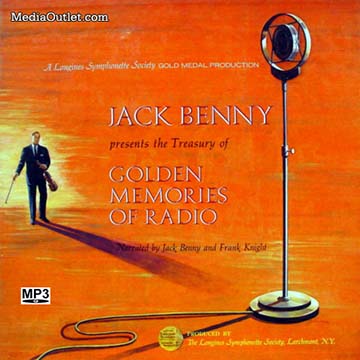
August 3, 1936: The Olympic Games (The Olympics): The 1936 Summer Olympics: (German: Olympische Sommerspiele 1936)) (The Games Of The XI Olympiad (German: Spiele Der XI. Olympiade), Berlin 1936): -- Jesse Owens wins his first of four Olympic Gold Medals at the Berlin Olympic Games for placing first in the 100 metre dash with a time of 10.3 seconds, defeating a teammate and a college friend Ralph Metcalfe by a tenth of a second and defeating Tinus Osendarp of the Netherlands by two tenths of a second. Owens participation in the 1936 Berlin Olympic Games was controversial on a number of accounts. On December 4, 1935, NAACP Secretary Walter Francis White wrote a letter to Owens about the matter, but never sent it. In it, he tryied to dissuade Owens from taking part in the Olympics in Nazi Germany, arguing that an African American should not promote a racist regime after what his race had suffered at the hands of white racists in his own country. In the months prior to the Games, a movement gained momentum in favor of a boycott. Owens was convinced by the NAACP to declare: "If there are minorities in Germany who are being discriminated against, the United States should withdraw from the 1936 Olympics". Yet he and others eventually took part after Avery Brundage, president of the American Olympic Committee branded them "un-American agitators". In 1936, Owens and his United States teammates sailed to the games on the SS Manhattan. Owens arrived at the new Olympic stadium to a throng of fans, many of them young girls yelling "Wo ist Jesse? Wo ist Jesse?" ("Where is Jesse? Where is Jesse?"). Just before the competitions, founder of Adidas athletic shoe company Adi Dassler visited Owens in the Olympic village and persuaded Owens to wear Gebruder Dassler Schuhfabrik shoes; this was the first sponsorship for a male African American athlete. Hitler was subsequently accused of failing to acknowledge Owens (who won gold medals on August 3, 4 (two), and 9) or shake his hand. Owens responded to these claims at the time: "Hitler had a certain time to come to the stadium and a certain time to leave. It happened he had to leave before the victory ceremony after the 100 meters [race began at 5:45 p.m.. But before he left I was on my way to a broadcast and passed near his box. He waved at me and I waved back. I think it was bad taste to criticize the "man of the hour" in another country." In an article dated August 4, 1936, the African American newspaper editor Robert L. Vann describes witnessing Hitler "salute" Owens for having won gold in the 100m sprint of August 3: "And then;_ wonder of wonders;_ I saw Herr Adolph Hitler, salute this lad. I looked on with a heart which beat proudly as the lad who was crowned king of the 100 meters event, get an ovation the like of which I have never heard before. I saw Jesse Owens greeted by the Grand Chancellor of this country as a brilliant sun peeped out through the clouds. I saw a vast crowd of some 85,000 or 90,000 people stand up and cheer him to the echo." Despite these accounts, Owens's successes at the games caused consternation for Hitler, who was using them to show the world a resurgent Nazi Germany. He and other government officials had hoped that German athletes would dominate the games. Nazi minister Albert Speer wrote that Hitler "was highly annoyed by the series of triumphs by the marvelous colored American runner, Jesse Owens. People whose antecedents came from the jungle were primitive, Hitler said with a shrug; their physiques were stronger than those of civilized whites and hence should be excluded from future games." In 2014, Eric Brown, British fighter pilot and test pilot, the Fleet Air Arm's most decorated living pilot, stated in the BBC documentary "Britain's Greatest Pilot: The Extraordinary Story Of Captain Winkle Brown": "I actually witnessed Hitler shaking hands with Jesse Owens and congratulating him on what he had achieved". Additionally, an article in The Baltimore Sun in August 1936 reported that Hitler sent Owens a commemorative inscribed cabinet photograph of himself. Later, on October 15, 1936, Owens repeated this allegation when he addressed an audience of African Americans at a Republican rally in Kansas City, remarking: "Hitler didn't snub me - it was our president who snubbed me. The president didn't even send me a telegram." In Germany, Owens had been allowed to travel with and stay in the same hotels as whites, at a time when African Americans in many parts of the United States, chiefly in the South, had to stay in segregated hotels that accommodated only blacks. When Owens returned to the United States, he was greeted in New York City by Mayor Fiorello LaGuardia. During a Manhattan ticker-tape parade in his honor along Broadway's Canyon of Heroes, someone handed Owens a paper bag. Owens paid it little mind until the parade concluded. When he opened it up, he found that the bag contained 10K USD in cash. Owens's wife Ruth later said: "And he [Owens] didn't know who was good enough to do a thing like that. And with all the excitement around, he didn't pick it up right away. He didn't pick it up until he got ready to get out of the car". After the parade, Owens was not permitted to enter through the main doors of the Waldorf Astoria New York and instead forced to travel up to the reception honoring him in a freight elevator. President Franklin D. Roosevelt (FDR) never invited Jesse Owens to the White House following his triumphs at the Olympic Games. When the Democrats bid for his support, Owens rejected those overtures: as a staunch Republican, he endorsed Alf Landon, Roosevelt's Republican opponent in the 1936 presidential race. Owens joined the Republican Party after returning from Europe and was paid to campaign for African American votes for the Republican presidential nominee Alf Landon in the 1936 presidential election. Speaking at a Republican rally held in Baltimore on October 9, 1936, Owens said: "Some people say Hitler snubbed me. But I tell you, Hitler did not snub me. I am not knocking the President. Remember, I am not a politician, but remember that the President did not send me a message of congratulations because, people said, he was too busy." Jesse Owens, African American track and field athlete and four-time Olympic gold medalist in the 1936 Games (d. 1980) is born James Cleveland Owens on September 12, 1913. He specialized in the sprints and the long jump, and was recognized in his lifetime as "perhaps the greatest and most famous athlete in track and field history". He set three world records and tied another, all in less than an hour at the 1935 Big Ten track meet in Ann Arbor, Michigan-a feat that has never been equaled and has been called "the greatest 45 minutes ever in sport". He achieved international fame at the 1936 Summer Olympics in Berlin, Germany by winning four gold medals: 100 meters, 200 meters, long jump, and 4 _ 100 meter relay. He was the most successful athlete at the Games and, as a black man, was credited with "single-handedly crushing Hitler's myth of Aryan supremacy", although he "wasn't invited to the White House to shake hands with the President, either". The Jesse Owens Award is USA Track and Field's highest accolade for the year's best track and field athlete. Owens was ranked by ESPN as the sixth greatest North American athlete of the 20th century and the highest-ranked in his sport. In 1999, he was on the six-man short-list for the BBC's Sports Personality of the Century. On Sale Until Midnight Tonight PT! https://store.earthstation1.com/jack-benny-presents-golden-memories-of-radio-6-album-set-mp3-63.html
Today's
EarthStation1.com 15% (Or More!) Off Commemorative Memorial Title:
Eyes On The Prize II: America At The Racial Crossroads DVD MP4 USB
Today, August 3, 2026
August 3, 1967: Civil Rights Movements: The American Civil Rights Movement (1954-1968): The Ghetto Riots (The Ghetto Rebellions, The Race Riots, The Negro Riots) (1964-1969): The Long, Hot Summer of 1967: The 1967 Milwaukee Riot: -- After four people were dead, 100 hurt and 1,740 people arrested, the National Guard restores order, bringing an end to The 1967 Milwaukee Riot. Although the damage caused by the riot was not as destructive as in such cities as Detroit and Newark, many businesses in the affected neighborhoods were severely damaged. Tensions increased afterward between police and residents. The July disturbance also served as a catalyst to additional unrest in the city; equal housing marches held in August often turned violent as white residents clashed with black demonstrators. On the Sunday evening of July 30, 1967, African American residents, outraged by the slow pace in ending housing discrimination and police brutality, begai to riot, sparked by brawls with police, a racist threat, gunfire and a fight between teenagers, and escalating into full-fledged rioting with fires and looting on Milwaukee's north side with the arrival of police. Within minutes, arson, looting, and sniping were ravaging the North Side of the city, primarily the 3rd Street Corridor. The city put a round-the-clock curfew into effect on July 31. The 1967 Milwaukee Riot was one of 159 race riots that swept cities in the United States during the "Long, Hot Summer Of 1967". As a result of the rioting in the Summer of 1967, and the preceding two years, President Johnson established the Kerner Commission to investigate the rioting and to provide recommendations for the future. In his remarks upon signing the order establishing the Commission, Johnson asked for answers to three basic questions about the riots: "What happened? Why did it happen? What can be done to prevent it from happening again and again?" Officially known as The National Advisory Commission on Civil Disorders, it was popularly known as the Kerner Commission after its chair, Governor Otto Kerner, Jr. of Illinois. It was an 11-member Presidential Commission, a special task force ordained by the President to complete a specific, special investigation or research. The Commission's final report, the Report of the National Advisory Commission on Civil Disorders, or Kerner Report, was released on February 29, 1968, after seven months of investigation. The report became an instant bestseller, and over two million Americans bought copies of the 426-page document. Its finding was that the riots resulted from black frustration at the lack of economic opportunity. Martin Luther King Jr. pronounced the report a "physician's warning of approaching death, with a prescription for life." The report berated federal and state governments for failed housing, education and social-service policies. The report also aimed some of its sharpest criticism at the mainstream media. "The press has too long basked in a white world looking out of it, if at all, with white men's eyes and white perspective." The report's most famous passage warned, "Our nation is moving toward two societies, one black, one white-separate and unequal." Its results suggested that one main cause of urban violence was white racism and suggested that white America bore much of the responsibility for black rioting and rebellion. It called to create new jobs, construct new housing, and put a stop to de facto segregation in order to wipe out the destructive ghetto environment. In order to do so, the report recommended for government programs to provide needed services, to hire more diverse and sensitive police forces and, most notably, to invest billions in housing programs aimed at breaking up residential segregation. On Sale Until Midnight Tonight PT! https://store.earthstation1.com/eyes-on-the-prize-ii-dvd-set-4-discs-complete-2nd-seri42.html
Today's
EarthStation1.com 15% (Or More!) Off Commemorative Memorial Title:
Columbia Revolt: University Protests Of 1968 DVD, Download, USB
Drive
Today, August 3, 2026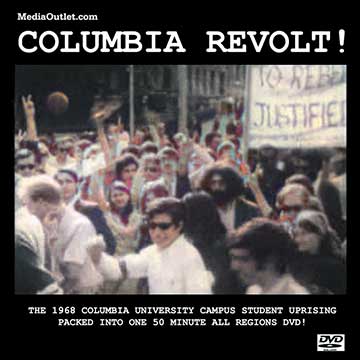
( #JCKaelin here: I hung out with David Peel on numerous occasions during my senior year of high school in 1979. He was all caught up in a song he was pushing at the time, "King Heroin" (which he pronounced "king HAIR-oh-ween"). We used to hang out at the Salt And Pepper diner in Greenwhich Village late night after his gigs, and my Rutherford High School schoolmate Barry Korsh drove him and I to our homes afterwards. I next saw Dave exactly thirty years later, on Friday, March 20, 2009, when I led the J-Rock NYC Meetup Group to see Frank Wood's Bobby Steele (The Undead, The Misfits) Birthday Bash rock show at The Parkside Lounge at the corner of East Houston St. and Attorney St. in The Bowery (three blocks down Attorney St. from The Delancey - and for history's sake, Attorney Street is so named because it was the location of Aaron Burr's law practice after he shot Alexander Hamilton dead in their infamous duel). Dave had absolutely no memory of me or Barry or anything we did back then at all - something which, all things considered about Dave, should not be any surprise at all!) ========= August 3, 1942: #BOTD: #HBD! David Peel, American singer, songwriter and guitarist, underground rock musician of New York City's Lower East Side (d. April 6, 2017) is #born David Michael Rosario in Manhattan to Puerto Rican parents, Angel Perez, who worked in a restaurant, and Esther Rosario, a homemaker. He first recorded in the late 1960s with Harold Black, Billy Joe White, George Cori and Larry Adam performing as David Peel and The Lower East Side Band. His raw, acoustic "street rock" with lyrics about marijuana and "bad cops" appealed mostly to hippies and the disenfranchised. He was raised in Brooklyn and served two years in the United States Army, and was stationed in Alaska. Peel took his stage name from a 1967 hoax that claimed that banana peels were psychoactive. In 1968, Peel was contracted by Elektra Records when he was first discovered and recorded two "envelope pushers" for the label. His album Have a Marijuana peaked at No. 186 on the Billboard chart. The song "Up Against the Wall (Motherfuckers)" from this album because the unofficial anthem of the Columbia University Protests Of 1968. Peel was rediscovered by John Lennon in 1971 as the early seventies continued its swing towards the youth revolution. Lennon befriended Peel when David was playing with his ragtag hippie band in New York's Washington Square Park in Greenwich Village. Lennon produced The Pope Smokes Dope for Peel. This album was banned in many countries and since has been sought after by collectors worldwide. Peel appeared with John Lennon at the John Sinclair Freedom Rally in Ann Arbor, Michigan on December 10, 1971, later released as a documentary film called "Ten for Two". On January 23, 1972, Peel and his band performed live on the David Frost Show with Lennon, Yoko Ono and Jerry Rubin. This was Lennon's first live appearance on U.S. TV as a solo performer. In 1976 the independent labels Orange Records and Auravox Records released An Evening With David Peel. The LP was hailed as being a breakthrough recording by capturing the tumultuous mid-1970s American underground movement as well as the bubbling under of live recordings that have become a mainstay of the recording arts. The mix was finalized by Ron St. Germain (of Band 311 fame) at Ultrasonic recording studios in Hempstead, New York. Peel has been associated with the "transgressive, shock" performer GG Allin, with Allin's debut album and early singles released by Peel's Orange record label. Allin would cover Peel's 'Devil's Prayer' and 'I Want to Kill You' and frequently cited him as a musical influence in interviews. In 1995, the vinyl LP tracks from An Evening With David Peel were combined with two new multi-tracked studio recordings: "Junk Rock" and "I Hate You" (recorded at Right Track Studios, NYC) for a CD release Up Against The Wall. In the additional studio recordings on the CD, Muruga Booker (of Genesis fame) played his "electric talking drum" on the comeback hit "Junk Rock". In 2011, Peel signed with Global Recording Artists. The David Peel Anthology, a career retrospective compiled by Peel with his favorite tracks from his entire career, was released in 2012. In 2011 through 2013, Peel was involved in the Occupy Wall Street protests at Zuccotti Park, in Union Square, and in other New-York-area locations. In addition to performing, Peel documented the protests via hundreds of photographs, some of which he released online. In 2013, David Peel and the Protesters released Up Against the Wall Street, an album of themed protest songs. In 2015, Peel was back to his fight for the legalization of marijuana, releasing his latest album as David Peel and the Lower East Side titled Give Hemp a Chance. Peel was working on his book Rock and Roll Outlaw, a career retrospective book that will include his complete lyrics, concert posters and photos from his career. Peel performed live in New York City on a regular basis. On March 31, 2017 Peel was escorted to the Veterans Administration hospital in Manhattan New York by fellow musician Joff Wilson, after complaining that he was not feeling well. He immediately suffered a series of three heart attacks upon his arrival. Peel died at the hospital on April 6, 2017. Peel was buried with full military honors at Calverton National Cemetery Wading River New York Section 53 Grave 3208 on April 17, 2017. On Sale Until Midnight Tonight PT! https://store.earthstation1.com/columbia-revolt-1969-dvd-university-student-upri1969.html
Today's
EarthStation1.com 15% (Or More!) Off Commemorative Memorial Title:
War And Peace In The Nuclear Age TV Series DVD, Download, USB
Drive
Today, August 3, 2026
August 3, 1972: The Aftermath Of World War II: The Cold War: The Cold War (1962-1979): Arms Control: Anti-Ballistic Missile Treaties:The Anti-Ballistic Missile Treaty (The ABM Treaty, ABMT): -- The United States Senate ratifies the Anti-Ballistic Missile Treaty. The Anti-Ballistic Missile Treaty (ABM Treaty or ABMT) (1972-2002) was an arms control treaty between the United States and the Soviet Union on the limitation of the anti-ballistic missile (ABM) systems used in defending areas against ballistic missile-delivered nuclear weapons. Under the terms of the treaty, each party was limited to two ABM complexes, each of which was to be limited to 100 anti-ballistic missiles. Signed in 1972, it was in force for the next 30 years. In 1997, five years after the Dissolution Of The Soviet Union, four former Soviet republics agreed with the United States to succeed the USSR's role in the treaty. In June 2002 the United States withdrew from the treaty, leading to its termination. On Sale Until Midnight Tonight PT! https://store.earthstation1.com/war-and-peace-in-the-nuclear-age-dvd-set-tv-series-7-disc7.html
Today's
EarthStation1.com 15% (Or More!) Off Commemorative Memorial Title:
The Second Red Scare 1947-1957 Documentaries MP4 Video Download
DVD
Today, August 3, 2026
August 3, 1948: Anti-Communism In The United States: The Red Scare: The Second Red Scare: The House Committee On Un-American Activities (HCUA) (The House Un-American Activities Committee [HUAC]): The Trials Of The House Committee On Un-American Activities (HCUA) (The House Un-American Activities Committee [HUAC]): The Trials Of Alger Hiss: The First Trial Of Alger Hiss: -- Whittaker Chambers, a writer on the staff of Time Magazine, testifies under subpoena before HUAC that Alger Hiss, U.S. State Department official, had secretly been a Communist and a spy for the Soviet Union while in federal service. Called before HUAC, Hiss categorically denied the charge. Richard Nixon first gained national attention in August 1948 when, as a HUAC member, his persistence helped break the Alger Hiss spy case; while many committee members doubted Chambers' allegations, Nixon believed them, and received secret information from the FBI about the matter, and pressed for the committee to continue its investigation. Hiss was convicted of perjury in connection with this charge in 1950. Chambers became an intellectual leader of the American Conservative movement after 1952. Hiss' friends and family continue to insist on his innocence, though a growing body of evidence refutes this, including revelations by KGB double agent Oleg Gordievsky that Hiss was a World War II Soviet agent whose codename was ALES. On Sale Until Midnight Tonight PT! https://store.earthstation1.com/the-second-red-scare-19471957-documentaries-mp4-video-dow194719574.html
Today's
EarthStation1.com 15% (Or More!) Off Commemorative Memorial Title:
The Nat King Cole Show 1956-1957 TV Series MP4 Video Download DVD
Set
Today, August 3, 2026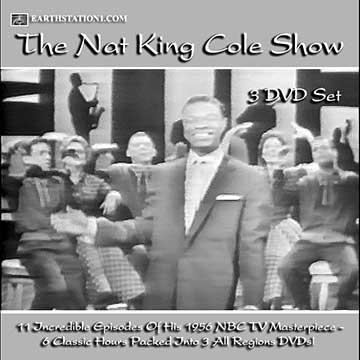
August 3, 1926: #BOTD: #HBD! Tony Bennett, American singer of traditional pop standards, big band, show tunes, and jazz, a painter who created works under his birth name Anthony Benedetto that are on permanent public display in several institutions, founder of The Frank Sinatra School Of The Arts in Astoria, Queens, New York City, and class act (d. July 21, 2023) is #born Anthony Dominick Benedetto at St. John's Hospital in Long Island City, Queens, New York City into an Italian-American family, Bennett began singing at an early age. He fought in the final stages of World War II as a U.S. Army infantryman in the European Theater. Afterward, he developed his singing technique, signed with Columbia Records and had his first number-one popular song with "Because of You" in 1951. Several top hits such as "Rags to Riches" followed in the early 1950s. He then refined his approach to encompass jazz singing. He reached an artistic peak in the late 1950s with albums such as The Beat of My Heart and Basie Swings, Bennett Sings. In 1962, Bennett recorded his signature song, "I Left My Heart in San Francisco". His career and his personal life experienced an extended downturn during the height of the rock music era. Bennett staged a comeback in the late 1980s and 1990s, putting out gold record albums again and expanding his reach to the MTV Generation while keeping his musical style intact. He remains a popular and critically praised recording artist and concert performer in the 2010s. He has won 19 Grammy Awards (including a Lifetime Achievement Award, presented in 2001) and two Emmy Awards, and was named an NEA Jazz Master and a Kennedy Center Honoree. Bennett has sold over 50 million records worldwide. Tony Bennett died at his home in New York City following a seven-year battle with Alzheimer's disease, aged 96. His family said he kept singing to the end, lastly "Because of You", Bennett's first major hit, reaching number one on the Billboard charts and staying there for 10 weeks in 1951. Bennett is interred alongside his parents at Calvary Cemetery, Queens, New York. In February 2021, an article in AARP Magazine revealed that Bennett had been diagnosed with Alzheimer's disease in 2016, though he continued to perform and record until the COVID-19 pandemic in early 2020. He briefly resumed performing in 2021 for his farewell performances. Bennett's twice-weekly singing practices are thought to have kept his brain stimulated and spared him from symptoms such as disorientation, depression, and a detachment from reality. His neurologist told AARP that, prior to the pandemic, the singer's touring schedule "kept him on his toes and also stimulated his brain in a significant way". Bennett recorded tracks with Lady Gaga from 2018 until early 2020 for their 2021 album Love for Sale, despite at times being "lost and bewildered" during recording sessions. In announcing Bennett's retirement in August 2021, Danny Bennett stated that the Alzheimer's was mainly affecting his father's short-term memory and that he would often forget he had just performed after a concert; his long-term memory remained intact and he could still fully remember all the lyrics to his repertoire when performing. On Sale Until Midnight Tonight PT! https://store.earthstation1.com/the-nat-king-cole-show-dvd-set-2-discs-classic-music-t2.html
Today's
EarthStation1.com 15% (Or More!) Off Commemorative Memorial Title:
Songs Of Protest And Conscience Played In The USA DVD, MP4, USB
Drive
Today, August 3, 2026
August 3, 1940: #BOTD: #HBD! Martin Sheen, American actor of Spanish/Irish descent is #born Ramon Gerard Antonio Estevez in Dayton, Ohio to Irish immigrant Mary-Ann (nee Phelan) and Spanish immigrant Francisco Estevez Martinez. During birth, Sheen's left arm was crushed by forceps, giving him limited lateral movement of that arm (Erb's palsy) and resulting in the arm being three inches (7.6 cm) shorter than his right. Martin Sheen first became known for his roles in the films The Subject Was Roses (1968) and Badlands (1973), and later achieved wide recognition for his appearance as Robert Kennedy in The Missiles Of October (1974) and for his leading roles in The Execution Of Private Slovik (1974), Apocalypse Now (1979), Out of the Darkness (1985 film about serial killer David Berkowitz) and as President Josiah Bartlet in the television series The West Wing (1999-2006). He has won the Best Actor award at the San Sebastian International Film Festival for his performance as Kit Carruthers in Badlands. Sheen's portrayal of Capt. Willard in Apocalypse Now earned a nomination for the BAFTA Award for Best Actor. Sheen has worked with a wide variety of film directors, including Richard Attenborough, Francis Ford Coppola, Terrence Malick, David Cronenberg, Mike Nichols, Martin Scorsese, Steven Spielberg, and Oliver Stone. Sheen received a star on the Hollywood Walk of Fame in 1989. In television, Sheen has won a Golden Globe and two Screen Actors Guild awards for playing the role of President Josiah Bartlet in The West Wing, and an Emmy for guest starring in the sitcom Murphy Brown. Born and raised in the United States by immigrant parents, he adopted the stage name Martin Sheen to help him gain acting parts. He is the father of four children (Emilio, Ramon, Carlos and Renee), all of whom are actors. Although known as an actor, Sheen also has directed one film, Cadence (1990), appearing alongside sons Charlie and Ramon. Sheen has narrated, produced, and directed documentary television, earning two Daytime Emmy awards in the 1980s. In addition to film and television, Sheen has been an activist in liberal politics. In the April 11, 2026 edition of The Guardian, Rosanna Greenstreet reported that during an interview with actor Richard Schiff (Jurassic Park, The West Wing, The Good Doctor, Ballers and Black Panther), he answed the question "Which living person do you most admire and why?" with "Martin Sheen, simply the kindest and most fun-loving person and serious activist I've ever known. If Jesus was alive today he'd point to Martin Sheen and say, 'That's what I was talking about.'" #MartinSheen #Actors #Movies #Film #MotionPictures #Hollywood #ClassicalHollywoodCinema #ClassicalHollywoodNarrative #ClassicHollywoodCinema #GoldenAgeOfHollywood #OldHollywood #SilverScreen #TV #Television #TVShows #TelevisionShows #TVInTheUS #TelevisionInTheUS #Liberals #Actvists #MP4 #VideoDownload #DVD On Sale Until Midnight Tonight PT! https://store.earthstation1.com/songs-of-protest-and-conscience-played-in-the-usa-dvd-mp4-us4.html
Today's
EarthStation1.com 15% (Or More!) Off Commemorative Memorial Title:
Statue Of Liberty Films Collection DVD, Video Download, USB Drive
Today, August 3, 2026
August 3, 2004: National Personifications: National Personifications Of The United States: National Monuments: National Monuments Of The United States: The Statue Of Liberty (Liberty Enlightening The World) (French: La Liberte Eclairant Le Monde): -- The pedestal of the Statue Of Liberty reopens after three years of closure due to security concerns following the September 11 attacks. #September1Attacks #StatueOfLiberty #LibertyIsland #NewYorkHarbor #LibertyEnlighteningTheWorld #LibertyGoddess #Libertas #FredericAugusteBartholdi #GustaveEiffel #BedloesIsland #LibertyIsland #NewYorkHarbor #Immigration #Statues #Neoclassicism #USDeclarationOfIndependence #JULYIVMDCCLXXVI #July4th1776 #AmericanHistory #USHistory #HistoryOfTheUS #WesternCulture #WesternCivilization #OccidentalCulture #WesternWorld #WesternSociety #WesternTradition #StoryOfCivilization #MP4 #VideoDownload #DVD On Sale Until Midnight Tonight PT! https://store.earthstation1.com/statue-of-liberty-dvd-historical-films.html
Today's
EarthStation1.com 15% (Or More!) Off Commemorative Memorial Title:
Axis Armor: Tanks Of Nazi Germany Japan & Italy MP4 Video
Download DVD
Today, August 3, 2026
August 3, 1940: The European Civil War: World War II: The Second European War (The European Theater Of World War II): The Mediterranean And Middle East Theater Of World War II: The East African Campaign (The Abyssinian Campaign): The Italian Invasion Of British Somaliland: -- Italian forces begin the invasion of British Somaliland, part of the East African Campaign (1940-1941) which took place in August 1940 between the metropolitan Italian, Eritrean and Somali forces of Fascist Italy and British, Commonwealth and Somali irregulars. On August 3, British air reconnaissance discovered that about 400 Italians had crossed the frontier at Biyad; early on August 4 the Italian central column was seen advancing on Hargeisa and the SCC skirmished with the Italians, slowly retiring, keeping watch and harassing the advance when possible.The Italians advanced in three widely spaced columns, Nasi communicating with de Simone by wireless and liaison aircraft, the central column heading for Tug Argan as the flanking columns attempted to deceive the defenders and exploit opportunities as they presented themselves. Aerial operations began on the opening day, with aircraft 15 RAF squadrons participating. The Italian expedition was intended to exploit mobility and speed but was hampered by the Somali terrain, rainy weather and the British defence of the colony, particularly at the Battle of Tug Argan (August 11-15). Italian attacks had the advantage of artillery and the outnumbered British, Commonwealth and Imperial forces were gradually worn down and slowly outflanked until the remaining fortified hilltops were made vulnerable to being captured piecemeal. After the failure of a counter-attack towards the Mirgo Pass, the local commander, Major-General Reade Godwin-Austen had too few men to retrieve the situation and to guard an escape route and was given permission to retreat towards Berbera. The British fought a rearguard action at Barkasan on August 17 and then retreated after dark but the improvised evacuation went better than expected and the second blocking position at Nasiyeh was also abandoned. The Italian advance was slowed by roads being swamped by the rains and the airstrip near Berbera being found to be garrisoned, making a coup de main (French for "blow with the hand", a swift attack that relies on speed and surprise to accomplish its objectives in a single blow) impractical. The British defeat was controversial and caused a deterioration in relations between General Archibald Wavell, the theatre commander, his subordinates and the Prime Minister Winston Churchill. On Sale Until Midnight Tonight PT! https://store.earthstation1.com/axis-armor-tanks-of-nazi-germany-japan-amp-italy-mp4-video-download-dv4.html
Today's
EarthStation1.com 15% (Or More!) Off Commemorative Memorial Title:
Maria Callas: An Operatic Biography 1988 DVD, MP4 Download, USB
Drive
Today, August 3, 2026
August 3, 1778: Grand Openings: Theatre Grand Openings (Theater Grand Openings): Music Hall Openings: Italian Music Hall Openings: -- The Theatre La Scala is inaugurated with the premiere of Antonio Salieri's Europa Riconosciuta. La Scala, and abbreviation in Italian of the official name Teatro alla Scala, is an opera house in Milan, Italy originally known as the Nuovo Regio Ducale Teatro alla Scala (New Royal-Ducal Theatre alla Scala). Most of Italy's greatest operatic artists, and many of the finest singers from around the world, have appeared at La Scala. The theatre is regarded as one of the leading opera and ballet theatres in the world and is home to the La Scala Theatre Chorus, La Scala Theatre Ballet and La Scala Theatre Orchestra. The theatre also has an associate school, known as the La Scala Theatre Academy (Italian: Accademia Teatro alla Scala), which offers professional training in music, dance, stage craft and stage management. On Sale Until Midnight Tonight PT! https://store.earthstation1.com/maria-callas-an-operatic-biography-1988-dvd-mp4-download-usb-19884.html
Today's
EarthStation1.com 15% (Or More!) Off Commemorative Memorial Title:
Hollywood Without Make-Up: Film Star Home Movies DVD MP4 Download
USB
Today, August 3, 2026
August 3, 1904: #BOTD: #HBD! Dolores del Rio, Mexican actress and beauty, the first major female Latin American crossover star in Hollywood (d. April 11, 1983) is #born Maria de los Dolores Asunsolo y Lopez Negrete in Victoria de Durango, Mexico. Dolores del Rio is also considered one of the most important female figures in the Golden Age of Mexican cinema, with a career spanning more than 50 years, and a notable career in American cinema during the 1920s and 1930s. After being discovered in Mexico, she began her film career in Hollywood in 1925. She had roles on a string of successful films, including Resurrection (1927), Ramona (1928) and Evangeline (1929). Del Rio came to be considered a sort of feminine version of Rudolph Valentino, a "female Latin Lover", in her years during the American "silent" era. With the advent of sound, she acted in a range of film genres, from contemporary crime melodramas to musical comedies and romantic dramas. Among her most successful films of that decade include Bird of Paradise (1932), Flying Down to Rio (1933) and Madame Du Barry (1934). In the early 1940s, when her Hollywood career began to decline, Del Rio returned to Mexico and joined the Mexican film industry, which at that time was at its peak. When Del Rio returned to her native country, she became one of the more important stars of the Golden Age of Mexican cinema. A series of Mexican films starring Del Rio, are considered classic masterpieces and helped boost Mexican cinema worldwide. Of them stands out the critically acclaimed Maria Candelaria (1943). Del Rio remained active mainly in Mexican films throughout the 1950s. In 1960 she returned to Hollywood. During the next years she appeared in Mexican and American films. From the late 1950s until the early 1970s she also successfully ventured into theater in Mexico and appeared in some American TV series. Dolores del Rio died from liver failure at the age of 78 in Newport Beach, California. It is said that the day she died, an invitation to attend the Oscars was sent to her. She was cremated and her ashes were moved from the United States to Mexico where they were buried at the Panteon de Dolores in Mexico City, Mexico, specifically on The Rotunda of Illustrious Persons. Del Rio is now considered a mythical figure of American and Mexican cinema, and a quintessential representation of the female face of Mexico in the world. On Sale Until Midnight Tonight PT! https://store.earthstation1.com/hollywood-without-makeup-dvd-film-star-home-movies.html
Today's
EarthStation1.com #OnThisDay Commemorative Memorial Title: A Duke Named
Ellington TV Series Duke Ellington DVD Download USB Drive
Today, August 3, 2026 August 3: Big Forehead Day: -- Today we
raise a toast to well-endowed foreheads! Deemed unattractive and
shamed for far too long, this holiday aims to reclaim the
marvelous big, bold, and beautiful forehead and help people begin
to love what they have. A large forehead is considered a sign of
intelligence and beauty in some cultures but downright unsightly
in others. Even though ideas of aesthetics may vary from country
to country, one thing is sure: fashion police abound in every era.
Take, for instance, the women in the Renaissance. A prominent
forehead was one of the most notable beauty trends of the time.
Portraits of women from this period feature high foreheads,
hinting at their beauty. But like most trends, the big forehead
trend was fascinating and excruciating. It involved women plucking
away at their hairline to get a large forehead. Some women plucked
not only their hairline but all traces of their eyebrows, which
eventually caused those hairs never to grow again. Similarly, a
few centuries later, Queen Elizabeth I became notorious for having
a large forehead, which she displayed within an inch of its life.
Since she was queen and dictated the fashions of that time, large
foreheads became the "it" thing. Everyone from
noblewomen to maids copied her style, some even going as far as
removing hair from their hairline permanently. But that's not the
only time large foreheads were popular. Hindus have believed for
thousands of years that large foreheads lead to increased success.
So, the bottom line is that beauty ideals come and go from time to
time and culture to culture. Large foreheads usually run in the
family, like the color of your eyes -- a family inheritance.
They're unique to you and your family. So, ditch the haters and
embrace that beautiful large forehead. Take inspiration from the
fabulous Duke Ellington or Rihanna or Tyra Banks and rock that
prominent forehead!
https://store.earthstation1.com/a-duke-named-ellington-dvd-complete-2-part-tv-serie2.html
August 3: Big Forehead Day: -- Today we
raise a toast to well-endowed foreheads! Deemed unattractive and
shamed for far too long, this holiday aims to reclaim the
marvelous big, bold, and beautiful forehead and help people begin
to love what they have. A large forehead is considered a sign of
intelligence and beauty in some cultures but downright unsightly
in others. Even though ideas of aesthetics may vary from country
to country, one thing is sure: fashion police abound in every era.
Take, for instance, the women in the Renaissance. A prominent
forehead was one of the most notable beauty trends of the time.
Portraits of women from this period feature high foreheads,
hinting at their beauty. But like most trends, the big forehead
trend was fascinating and excruciating. It involved women plucking
away at their hairline to get a large forehead. Some women plucked
not only their hairline but all traces of their eyebrows, which
eventually caused those hairs never to grow again. Similarly, a
few centuries later, Queen Elizabeth I became notorious for having
a large forehead, which she displayed within an inch of its life.
Since she was queen and dictated the fashions of that time, large
foreheads became the "it" thing. Everyone from
noblewomen to maids copied her style, some even going as far as
removing hair from their hairline permanently. But that's not the
only time large foreheads were popular. Hindus have believed for
thousands of years that large foreheads lead to increased success.
So, the bottom line is that beauty ideals come and go from time to
time and culture to culture. Large foreheads usually run in the
family, like the color of your eyes -- a family inheritance.
They're unique to you and your family. So, ditch the haters and
embrace that beautiful large forehead. Take inspiration from the
fabulous Duke Ellington or Rihanna or Tyra Banks and rock that
prominent forehead!
https://store.earthstation1.com/a-duke-named-ellington-dvd-complete-2-part-tv-serie2.html
Today's
EarthStation1.com #OnThisDay Commemorative Memorial Title: Native North
American Indian History Documentaries MP4 Downloads DVDs
Today, August 3, 2026August 3, 1757: The Anglo-French Wars
(1109-1815): The Second Hundred Years' War (1689-1815): The Sixty
Years' War (French: Guerre De Soixante Ans) (1754-1815): The Seven
Years' War (1756-1763): The French And Indian War (1754-1763): The
Siege Of Fort William Henry (French: Bataille De Fort William
Henry) (August 3-9, 1757): -- The Siege Of Fort William Henry
begins early in the morning when French and Canadian forces under
and the French Chevalier De Levis, Francois de Gaston, blocked the
road between Fort Edward on the Hudson River and Fort William
Henry, on the frontier between the British Province of New York
and the French Province of Canada at the southern end of Lake
George, skirmishing with the recently arrived 800 Massachusetts
militia under the command of British Lieutenant Colonel John Young
to reinforce the poorly supported force of British regulars and
provincial militia of the British-held garrison at William Henry.
The commander of French and Indian forces, French Lieutenant
General Louis-Joseph de Montcalm, summoned British Lieutenant
Colonel George Monro, commander of the British regulars and
provincial militia garrison of Fort Henry, to surrender at 11:00
am. Monro refused, and sent messengers south to Fort Edward,
indicating the dire nature of the situation and requesting
reinforcements. British Brigadier General Daniel Webb, in command
of the New York frontier from his base at Fort Edward, refused to
send any of his estimated 1,600 men north since, feeling
threatened by Levis, they were all that stood between the French
and Albany. He wrote to Monro on August 4 that he should negotiate
the best terms possible; however, this communication was
intercepted by the French, and delivered to Montcalm. Montcalm, in
the meantime, ordered the commander of the French regiments of
Bearn and Royal Roussillon, Francois-Charles de Bourlamaque, to
begin siege operations. The French opened trenches to the
northwest of the fort with the objective of bringing their
artillery to bear against the fort's northwest bastion. On August
5, French guns began firing on the fort from 2,000 yards (1,800
m), a spectacle the large Indian contingent relished. The next day
a second battery opened fire from 900 feet (270 m) further along
the same trench, creating a crossfire. The effect of the
garrison's return fire was limited to driving French guards from
the trenches, and some of the fort's guns either were dismounted
or burst owing to the stress of use. On August 7, Montcalm sent
Bougainville to the fort under a truce flag to deliver the
intercepted dispatch. By then the fort's walls had been breached,
many of its guns were useless, and the garrison had taken many
casualties. After another day of bombardment by the French, during
which their trenches approached another 250 yards (230 m), Monro
raised the white flag to open negotiations. After several days of
bombardment and increasing casualty rates, Monro surrendered to
Montcalm, whose force included nearly 2,000 Indians from various
tribes. The terms of surrender included the withdrawal of the
garrison to Fort Edward, with specific terms that the French
military protect the British from the Indians as they withdrew
from the area. In one of the most notorious incidents of the
French and Indian War, Montcalm's Indian allies violated the
agreed terms of surrender and attacked the departing British
column, which had been deprived of ammunition, as it left the
fort. They killed and scalped numerous soldiers and civilians,
took as captives women, children, servants, and slaves, and
slaughtered sick and wounded prisoners. Early accounts of the
events called it a massacre and implied that as many as 1,500
people were killed, although it is unlikely more than 200 people
(less than 10% of the British fighting strength) were actually
killed in the massacre. Whether or not Montcalm and the other
French officers present encouraged or opposed the actions of their
Indian allies, and the total number of victims, remain matters of
historical debate. The memory of the killings influenced the
actions of British military commanders, especially those of
General Jeffery Amherst, for the remainder of the war. The events
of the battle and the subsequent killings were depicted in the
1826 novel The Last Of The Mohicans by James Fenimore Cooper and
in film adaptations of the book. Though archaeological evidence
demonstrates that a brutal massacre did indeed occurs there, based
on the skeletons that have been excavated in and around Fort
Henry, Cooper's description of the events contain numerous
inaccuracies, and his work, and the sometimes-lurid descriptions
of the event by early historians like Benson Lossing and Francis
Parkman, led to the belief that many more people died than
actually had. Lossing wrote that "fifteen hundred [people]
were butchered or carried into hopeless captivity", but in
fact, many more were captured than killed, and even many of those
captured were eventually freed at the insistence of the French.
Part of the site was scientifically excavated in 1953 by
archaeologist Stanley Gifford, and again in the 1990s by a
forensic anthropological team led by Maria Liston and Brenda
Baker. The latter study found that diseases, in particular
smallpox, influenza and tuberculosis brought more casualties than
acts of war -- with forensic anthropologist Maria Liston declaring
that their findings show a group in worse shape and with more
pathologies than anything she had ever worked with. They also show
that the Indian attack described in The Last of the Mohicans, long
thought to have been exaggerated, was in fact understated.
https://store.earthstation1.com/native-north-american-indian-history-documentaries-dvd-mp4-us4.html
Today's
EarthStation1.com #OnThisDay Commemorative Memorial Title: Unknown Chaplin
(1983) Charlie Chaplin TV Series DVD, Download, USB
Today, August 3, 2026August 3, 2023: #DOTD: #RIP: Carl Davis,
American-born English conductor and composer (b. October 28, 1936)
#dies of a brain hemorrhage in Oxford, England, aged 86. His
burial details are not publicly disclosed. Carl Davis CBE
(Commander Of The British Empire) was born into a Jewish family in
Brooklyn, New York City; he made his home in the United Kingdom
since 1961. In 1970 he married the English actress Jean Boht. He
has written music for more than 100 television programmes,
including The World At War (1973-74), The Naked Civil Servant
(1975), Shades of Greene (1975), The Kiss of Death (1977),
Langrishe, Go Down (1978), Prince Regent (1979), Private Schulz
(1980), Oppenheimer (1980), Winston Churchill: The Wilderness
Years (1981), The Hound of the Baskervilles (1982), The Far
Pavilions (1984), The Day the Universe Changed (1985), Ashenden
(1991), Pride And Prejudice (1995), Anne Frank Remembered (1995)
Coming Home (1998) and Upstairs Downstairs (2010). He is also well
known for creating music to accompany silent films. He
collaborated with Paul McCartney in the creation of the Liverpool
Oratorio.
https://store.earthstation1.com/unknown-chaplin-tv-miniseries-1983-dvd-2-19832.html
Today's
EarthStation1.com #OnThisDay Commemorative Memorial Title: Winston Churchill:
The Wilderness Years TV Series DVD, MP4, USB Drive
Today, August 3, 2026August 3, 2017: #DOTD: #RIP: Robert
Hardy, English actor and antiquarian who had a long career in
theatre, film and television (b. October 29, 1925) #dies aged 91
at Denville Hall, a home for retired actors in the London Borough
of Hillingdon, England. His remains were cremated; the final
disposition of his ashes are not publicly disclosed, other than
that they were given to family or friend(s). Timothy Sydney Robert
Hardy CBE FSA was born in Cheltenham, also known as Cheltenham
Spa, a large spa town and borough on the edge of the Cotswolds in
the county of Gloucestershire, England. He began his career as a
classical actor and later earned widespread recognition for roles
such as Siegfried Farnon in the BBC television series All
Creatures Great and Small, Cornelius Fudge in the Harry Potter
film series and Winston Churchill in several productions,
beginning with the Southern Television series Winston Churchill:
The Wilderness Years. He was nominated for the BAFTA for Best
Actor for All Creatures Great and Small in 1980 and Winston
Churchill: The Wilderness Years in 1982. Aside from acting, Hardy
was an acknowledged expert on the medieval English longbow and
wrote two books on the subject, for which he was awarded his FSA
(Fellow Of The Society Of Antiquaries) from the Society Of
Antiquaries of London, a learned society "charged by its
Royal Charter of 1751 with 'the encouragement, advancement and
furtherance of the study and knowledge of the antiquities and
history of this and other countries'."
https://store.earthstation1.com/winston-churchill-the-wilderness-years-tv-series-dvd-set-4-disc4.html
Today's
EarthStation1.com #OnThisDay Commemorative Memorial Title: Audio Recording
History Films Collection DVD, Download, USB Drive
Today, August 3, 2026August 3, 1929: #DOTD: #RIP: Emile
Berliner, German-American inventor, best known for inventing the
lateral-cut flat disc record (called a "gramophone record"
in British and American English) used with a gramophone, which
became the most popular and thereafter standard phonograph audio
record player format (b. May 20, 1851) #dies of a heart attack at
his home at the Wardman Park Hotel in Washington, D.C., at the age
of 78. He is buried in Rock Creek Cemetery in Washington, D.C.,
alongside his wife and a son, Herbert Samuel Berliner. Emile
Berliner was born Emil Berliner in Hanover, Germany, in 1851 into
a Jewish merchant family. He founded the United States Gramophone
Company in 1894; The Gramophone Company in London, England, in
1897; Deutsche Grammophon in Hanover, Germany, in 1898; and
Berliner Gram-o-phone Company of Canada in Montreal in 1899
(chartered in 1904). Berliner also invented what was probably the
first radial aircraft engine (1908), a helicopter (1919), and
acoustical tiles (1920s).
https://store.earthstation1.com/audio-recording-history-films-dual-layer-dvd.html
Today's
EarthStation1.com #OnThisDay Commemorative Memorial Title: Lenny Bruce Comedy
Album MP3 MegaSet CD, MP3 Download, USB Flash Drive
Today, August 3, 2026August 3, 1966: #DOTD: #RIP: Lenny Bruce,
Jewish-American stand-up comedian, social critic, satirist, actor
and screenwriter (b. October 13, 1925) #dies, found dead of a
morphine overdose at the age of 40 in the bathroom of his
Hollywood Hills home at 8825 W. Hollywood Blvd. He is buried at
Eden Memorial Park in Mission Hills, Los Angeles County,
California. Lenny Bruce was born Leonard Alfred Schneider to a
Jewish family in Mineola, New York. He was renowned for his open,
free-style and critical form of comedy which integrated satire,
politics, religion, sex, and vulgarity. His 1964 conviction in an
obscenity trial was followed by a posthumous pardon, the first in
the history of New York state, by then-Governor George Pataki in
2003. Bruce was found dead of a morphine overdose at the age of 40
in the bathroom of his Hollywood Hills home at 8825 W. Hollywood
Blvd. Bruce is renowned for paving the way for future outspoken
counterculture-era comedians, and his trial for obscenity is seen
as a landmark for freedom of speech in the United States. In 2017,
Rolling Stone magazine ranked him third (behind disciples Richard
Pryor and George Carlin) on its list of the 50 best stand-up
comics of all-time.
https://store.earthstation1.com/lenny-bruce-comedy-album-mp3-megase3.html
Today's
EarthStation1.com #OnThisDay Commemorative Memorial Title: WABC Radio
Airchecks MP3 Collection 1960s-1980s DVD, MP3 Download, USB
Today, August 3, 2026August 3, 2008: #DOTD: #RIP: Erik
Darling, American singer-songwriter and folk music artist who was
an important influence on the folk scene in the late 1950s and
early 1960s, best known as the cofounder of The Rooftop Singers
and their hit single "Walk Right In" (b. September 25,
1933) #dies in Chapel Hill, North Carolina, from Burkitt's
lymphoma at the age of 74. His remains were cremated; the location
of ashes is unknown. Darling was born in Baltimore, Maryland. He
entered New York University in the early 1950s, but soon abandoned
higher education. Inspired by the folk music group The Weavers, in
the 1950s, he formed The Tunetellers, which evolved into The
Tarriers with actor/singer Alan Arkin. Their version of the
"Banana Boat Song" reached No. 4 on the Billboard chart.
In April 1958, Darling replaced Pete Seeger in The Weavers, and he
continued working club dates with The Tarriers until November
1959. Darling also recorded three solo albums. His second solo
effort, True Religion, for Vanguard in 1961 was influential on
younger folkies of the day. In 1956, he accompanied the Kossoy
Sisters on their album Bowling Green. Additional instrumental work
is featured on Banjo Music of the Southern Appalachians (Olympic
Records, undated, with Darling's first name misspelled as Eric on
the album cover). Darling left the Weavers in June 1962 to work as
a soloist on the emerging coffeehouse circuit. That summer he
formed the jazz-folk trio The Rooftop Singers with longtime friend
Bill Svanoe, with the two of them singing and on guitar, and
former jazz singer Lynn Taylor on lead vocals. Intended as a
studio-only project for Vanguard, the group landed an unexpected
number one pop hit with a cover of Gus Cannon's 1929 song "Walk
Right In". Darling put the group together in June 1962,
specifically to record an updated and uptempo version of a 1929
Gus Cannon folk blues song, "Walk Right In". The trio
recorded the song for Vanguard Records, with updated lyrics and an
arrangement featuring paired 12-string acoustic guitars. The
record became the most successful single in Vanguard's history. In
the U.S., the song was #1 for two weeks on the Billboard Hot 100
chart in early 1963. It spent five weeks atop the Easy Listening
chart, which would later become known as the Adult Contemporary
chart. In addition, "Walk Right In" reached both the R &
B chart (peaking at #4) as well as the country music chart
(peaking at #23). The song reached #1 in Australia on the Kent
Music Report in 1963, and it made the UK Singles Chart, peaking at
#10. The recording sold over one million copies, gaining gold disc
status. The album that contained this song was also called Walk
Right In, and was nominated for a Grammy Award in the Best Folk
Recording category. The group was more influenced by ragtime,
blues, and songster material than contemporaneous folk groups such
as The Weavers, which Darling belonged to until just before he
formed the Rooftop Singers. They were also less overtly political.
The group played at the Newport Folk Festival in 1963. Vanguard
released several further singles, the most successful being "Tom
Cat" (#20, May 1963). Yielding to pressure from her husband,
Taylor left the trio shortly after Vanguard released the group's
second album, Good Time!. Darling and Svanoe then recruited Mindy
Stuart to replace her. This line-up recorded one final album,
Rainy River. Patricia Street replaced Stuart shortly before the
Rooftop Singers formally disbanded in 1967. Darling and Street
continued working as a duo into the early 1970s, recording the
album The Possible Dream for Vanguard. Don McLean, who became
friends with Darling in 1961, looked back on Darling as "a
genuine philosopher and perfectionist." He said "I
appreciated the time he spent with me so long ago. Undivided
mental attention to every aspect of music making and performing is
a hallmark of Erik's work, and I believe some of that rubbed off
on me." In 1967, Darling and Paul Bennett were co-credited
for writing the song "Babe I'm Gonna Leave You," by
Quicksilver Messenger Service, which appears to be a medley of
Darling's 1958 song "St. John's River" and Joan Baez's
recording of "Babe I'm Gonna Leave You", originally
written by Anne Bredon.
https://store.earthstation1.com/wabc-musicradio-shows-mp3-dvd-60s80s-am-360807775.html
Today's
EarthStation1.com #OnThisDay Commemorative Memorial Title: Joseph Conrad: The
Secret Agent + 5 Radio Shows DVD MP4 USB Drive
Today, August 3, 2026August 3, 1924: #DOTD: #RIP: Joseph
Conrad, Polish-born British novelist regarded as one of the
greatest novelists to write in the English language, best known as
the author of Heart of Darkness (1899) and The Secret Agent (1907)
(b. December 3, 1857) #dies at his house, Oswalds, in
Bishopsbourne, Kent, England, probably of a heart attack, aged 66.
He is interred at Canterbury Cemetery, Canterbury, under a
misspelled version of his original Polish name, as "Joseph
Teador Conrad Korzeniowski". Inscribed on his gravestone are
the lines from Edmund Spenser's The Faerie Queene which he had
chosen as the epigraph to his last complete novel, The Rover: "
========= Sleep after toyle, port after stormie seas, Ease after
warre, death after life, doth greatly please ========= In 1996 his
grave was designated a Grade II listed structure. Joseph Conrad
was born in the Ukraine as Josef Teodor Konrad Korzeniowski.
Although he could speak no english at age 20, he went on to become
one of the greatest novelists to write in the English language. He
joined the British merchant marine in 1878, and was granted
British citizenship in 1886. He was a master prose stylist who
brought a non-English sensibility into English literature. He
wrote stories and novels, many with a nautical setting, that
depict trials of the human spirit in the midst of an impassive,
inscrutable universe. Conrad is considered an early modernist,
though his works still contain elements of 19th-century realism.
His narrative style and anti-heroic characters have influenced
numerous authors, and many films have been adapted from, or
inspired by, his works. Writing in the heyday of the British
Empire, Conrad drew on, among other things, his native Poland'
national experiences and his own experiences in the French and
British merchant navies, to create short stories and novels that
reflect aspects of a European-dominated world, including
imperialism and colonialism, and that profoundly explore the human
psyche.
https://store.earthstation1.com/joseph-conrad-the-secret-agent-dvd-thriller-novel-backstory.html
Today's
EarthStation1.com #OnThisDay Commemorative Memorial Title: The Unknown War:
The Great Patriotic War Series WWII USSR DVD MP4 USB
Today, August 3, 2026August 3, 1968: #DOTD: #RIP: Konstantin
Rokossovsky, Marshal Of The Soviet Union, one of the most
prominent Red Army commanders of World War II, Soviet officer of
Polish origin who became Marshal of Poland and served as Poland's
Defence Minister from 1949 until his removal in 1956 during the
Polish October (October 1956, Polish Thaw, Gomulka's Thaw) (b.
December 21, 1896) #dies of prostate cancer in Moscow, Russian
SFSR, Soviet Union, aged 71. His ashes are buried in the Kremlin
Wall Necropolis on Red Square. He was born Konstantin
Konstantinovich (Xaverevich) Rokossovsky in Warsaw, then part of
Congress Poland under Russian rule. Rokossovsky served in the
Imperial Russian Army during World War I. In 1917 he joined the
Red Guards and in 1918 the newly-formed Red Army; he fought with
great distinction during the Russian Civil War of 1917-1922.
Rokossovsky held senior commands until 1937 when he fell victim to
the Great Purge, during which he was branded a traitor, imprisoned
and probably tortured. After Soviet failures in the Winter War of
1939-1940, Rokossovsky was taken out of prison and reinstated due
to an urgent need for experienced officers. Following Operation
Barbarossa, Germany's invasion of the Soviet Union in June 1941,
Rokossovsky played key roles in The Battle Of Moscow and the
counter-offensives at The Battle Of Stalingrad and The Battle Of
Kursk. He especially renowned for his planning and execution of
Operation Bagration, the Belorussian Strategic Offensive Operation
fought between 22 June and 19 August 1944, a major victory which
destroyed the German Army Group Centre and completely ruptured the
German front line, one of the most decisive Red Army successes of
the Second World War, for which he was made a Marshal of the
Soviet Union. After the war, Rokossovsky became Defence Minister
and deputy chairman of the Council of Ministers in the
newly-established Polish People's Republic. Forced out of office
in Poland in 1956 after Wladyslaw Gomulka became the leader of
Poland, Rokossovsky then returned to the Soviet Union, where he
lived out the rest of his life until his death. nder of PT-59
(a.k.a. PTGB-1). Kennedy and Thom remained friends, and when Thom
died in a 1946 car accident, Kennedy was one of his pallbearers.
https://store.earthstation1.com/the-unknown-war-complete-tv-series-soviet-union-wwii-10-dvd-s10.html
Today's
EarthStation1.com #OnThisDay Commemorative Memorial Title: The Nobel Century
Nobel Prize History TV Series DVD, MP4, USB Stick
Today, August 3, 2026August 3, 2008: #DOTD: #RIP: Aleksandr
Solzhenitsyn, Russian novelist, philosopher, historian, short
story writer and political prisoner and recipient of the Nobel
Prize in Literature in 1970 (b. December 11, 1918) #dies aged 89
in Moscow, SFSR of heart failure. He is buried at Donskoi
Monastery Cemetery in Moscow, Russia. Aleksandr Isayevich
Solzhenitsyn, born in Kislovodsk, RSFSR (now in Stavropol Krai,
Russia), was an outspoken critic of the Soviet Union and Communism
and helped to raise global awareness of the Soviet Gulag
forced-labor camp system. After serving in the Red Army during
World War II, he was sentenced to spend eight years in a labour
camp and then internal exile for criticizing Josef Stalin in a
private letter. He was allowed to publish only one work in the
Soviet Union, the novel One Day in the Life of Ivan Denisovich
(1962). Although the reforms brought by Nikita Khrushchev freed
him from exile in 1956, the publication of Cancer Ward (1968),
August 1914 (1971), and The Gulag Archipelago (1973) angered the
Soviet Union authorities, and Solzhenitsyn lost his Soviet
citizenship and was exiled in 1974. He was flown to West Germany,
and in 1976 he moved with his family to the United States, where
he continued to write. In 1990, shortly before the Dissolution Of
The Soviet Union, his citizenship was restored, and four years
later he returned to Russia, where he remained until his death in
2008. He was awarded the 1970 Nobel Prize in Literature "for
the ethical force with which he has pursued the indispensable
traditions of Russian literature". His The Gulag Archipelago
was a highly influential work that "amounted to a head-on
challenge to the Soviet state" and sold tens of millions of
copies.
https://store.earthstation1.com/the-nobel-century-nobel-prize-history-tv-series-dvd-mp4-us4.html
Today's
EarthStation1.com #OnThisDay Commemorative Memorial Title: Dangerous Years
President Eisenhower And The Cold War DVD, MP4, USB
Today, August 3, 2026August 3, 1922: #BOTD: #HBD! John
Eisenhower, United States Army general, military historian and
diplomat, 45th United States Ambassador to Belgium (d. December
21, 2013) is #born John Sheldon Doud Eisenhower at Denver General
Hospital in Denver, Colorado. The son of President Dwight D.
Eisenhower, his decorated military career spanned from before,
during, and after his father's presidency, and he would retire
from active duty in 1963 and then altogether in 1974. From 1969 to
1971, he served as United States Ambassador to Belgium during the
administration of President Richard Nixon, previously his father's
Vice President. Eisenhower was born in Denver, Colorado to future
U.S. President and United States Army General of the Army Dwight
D. Eisenhower and his wife, Mamie; he was their second child.
Their elder son, Doud, known affectionately as "Icky",
died in 1921, at age three, after contracting scarlet fever.
Eisenhower, like his father, attended the United States Military
Academy at West Point, graduating on June 6, 1944, the same day as
the Normandy Landings, which his father was commanding. Eisenhower
served in the U.S. Army during World War II and the Korean War,
remaining on active duty until 1963; then serving in the U.S. Army
Reserve until retirement in 1975 - attaining the rank of brigadier
general. A decorated soldier, Eisenhower found his World War II
military career thwarted by fears for his safety and concern from
the top brass that his death or capture would be a distraction to
his father, the Supreme Allied Commander. During World War II, he
was assigned to intelligence and administrative duties. This issue
arose again in 1952 when Major Eisenhower was assigned to fight in
a combat unit in Korea while his father ran for President. But
unlike World War II, John was able to see combat in Korea. After
serving combat with an infantry battalion, he was reassigned to
the 3rd Division headquarters. During his father's presidency,
John Eisenhower served as Assistant Staff Secretary in the White
House, on the Army's General Staff, and in the White House as
assistant to General Andrew Goodpaster. In the administration of
President Richard Nixon, who had been his father's Vice President,
he served as U.S. Ambassador to Belgium from 1969 to 1971. In
1972, President Nixon appointed Eisenhower Chairman of the
Interagency Classification Review Committee. In 1975, he served
President Gerald Ford as chairman of the President's Advisory
Committee on Refugees. As a military historian, Eisenhower wrote
several books, including The Bitter Woods, a study of the Battle
Of The Bulge, and So Far from God, a history of the
Mexican-American War. In a New York Times review of the latter,
historian Stephen W. Sears remarked that Eisenhower "writes
briskly and authoritatively, and his judgments are worth reading."
Eisenhower wrote Zachary Taylor: The American Presidents Series:
The 12th President, 1849-1850 (2008). John Eisenhower also wrote
the forewords to Borrowed Soldiers, by Mitchell Yockelson of the
U.S. National Archives, and to Kenneth W. Rendell's Politics, War
and Personality: 50 Iconic Documents of World War II. In later
years, he had been an opponent of Frank Gehry's proposed design
for the National Dwight D. Eisenhower Memorial, which he said was
"too extravagant" and "attempts to do too much."
A lifelong Republican, Eisenhower voted for Democrat John Kerry in
the 2004 Presidential election, citing dissatisfaction with
Republican incumbent George W. Bush's management of U.S. foreign
policy. During the 2008 presidential election, in which
presidential candidate John McCain and vice presidential
candidates Sarah Palin and Joe Biden all had children enlisted in
the armed forces, he wrote about his wartime experience as the son
of a sitting President in an cautionary opinion piece in The New
York Times entitled "Presidential Children Don't Belong in
Battle". Eisenhower married Barbara Jean Thompson on June 10,
1947, only a few days before her twenty-first birthday. Barbara
was born on June 15, 1926, in Fort Knox, Kentucky, into an Army
family. She was the daughter of Col. Percy Walter Thompson
(November 8, 1898 - June 19, 1974) by his wife Beatrice (nee
Birchfield). Col. Thompson was commander of the Allied
Expeditionary Forces. The Eisenhowers had four children: 1) Dwight
David Eisenhower II (born March 31, 1948, West Point, New York),
who married Julie Nixon, herself a presidential daughter; 2)
(Barbara) Anne Eisenhower (born May 30, 1949, West Point, New
York); 3) Susan Elaine Eisenhower (born December 31, 1951, Fort
Knox, Kentucky); and 4) Mary Jean Eisenhower (born December 21,
1955, Washington, DC). All of his daughters were presented as
debutantes to high society at the prestigious International
Debutante Ball at the Waldorf-Astoria Hotel in New York City. John
and Barbara divorced in 1986 after thirty-nine years of marriage.
In 1988, Barbara married widower Edwin J. Foltz, a former Vice
President at the Campbell Soup Company. She died on September 19,
2014, in Gladwyne, Montgomery County, Pennsylvania. In 1988,
Eisenhower married Joanne Thompson. He lived in Trappe, Maryland,
after moving there from Kimberton, Pennsylvania. He died at
Trappe, Maryland on December 21, 2013, aged 91. He is buried at
West Point Cemetery on the grounds of the United States Military
Academy. From the death of John Coolidge in 2000 until his own
death, Eisenhower was the oldest living presidential child.
https://store.earthstation1.com/dangerous-years-president-eisenhower-and-the-cold-war-dvd.html
Today's
EarthStation1.com #OnThisDay Commemorative Memorial Title: Burns And Allen
Radio Series MP3 Set DVD, Audio Download, USB Drive
Today, August 3, 2026August 3, 1995: #DOTD: #RIP: Ida Lupino,
English-American actress, singer, film director, and producer of
the prominent Italian emigre English theatre Lupino family, widely
regarded as one of the most prominent female filmmakers working
during the 1950s in the Hollywood studio system (b. February 4,
1918) #dies from a stroke while undergoing treatment for colon
cancer in Los Angeles at the age of 77. She is buried in Forest
Lawn Memorial Park in Glendale, Los Angeles County, California.
Her memoirs, Ida Lupino: Beyond the Camera, were edited after her
death and published by Mary Ann Anderson. Ida Lupino was born in
Herne Hill, London, to actress Connie O'Shea (also known as Connie
Emerald) and music hall comedian Stanley Lupino, a member of the
theatrical Lupino family, which included Lupino Lane, a
song-and-dance man. Her father, a top name in musical comedy in
the UK and a member of a centuries-old theatrical dynasty dating
back to Renaissance Italy, encouraged her to perform at an early
age. He built a backyard theatre for Lupino and her sister Rita
(1920-2016), who also became an actress and dancer. Lupino wrote
her first play at age seven and toured with a travelling theatre
company as a child. By the age of ten, Lupino had memorised the
leading female roles in each of Shakespeare's plays. After her
intense childhood training for stage plays, Ida's uncle Lupino
Lane assisted her in moving towards film acting by getting her
work as a background actor at British International Studios. She
wanted to be a writer, but in order to please her father, Lupino
enrolled in the Royal Academy of Dramatic Art. She excelled in a
number of "bad girl" film roles, often playing
prostitutes. Lupino did not enjoy being an actress and felt
uncomfortable with many of the early roles she was given. She felt
that she was pushed into the profession due to her family history.
It was in reaction to this that whe was to become widely regarded
as one of the most prominent female filmmakers working during the
1950s in the Hollywood studio system. With her independent
production company, she co-wrote and co-produced several
social-message films and became the first woman to direct a film
noir with The Hitch-Hiker in 1953. Throughout her 48-year career,
she made acting appearances in 59 films and directed eight others,
working primarily in the United States, where she became a citizen
in 1948. She also directed more than 100 episodes of television
productions in a variety of genres including westerns,
supernatural tales, situation comedies, murder mysteries, and
gangster stories. She was the only woman to direct an episode of
the original The Twilight Zone series ("The Masks"), as
well as the only director to have starred in the show.
https://store.earthstation1.com/burns-and-allen-radio-mp3-dvd-comedy-show3.html